
About MVP AMC
Pioneers in Entrance Automation and Security Solutions
Prompt & Reliable Services
Presently, MVP Maintenance Division stands as one of the most active maintenance companies in the Pune area, specializing in Entrance Automation & Security Solutions. Our infrastructure includes a large pool of skilled manpower resources, a fleet of vehicles, and the latest calibrated testing and balancing instruments.
Our Method of Contract undertaking:
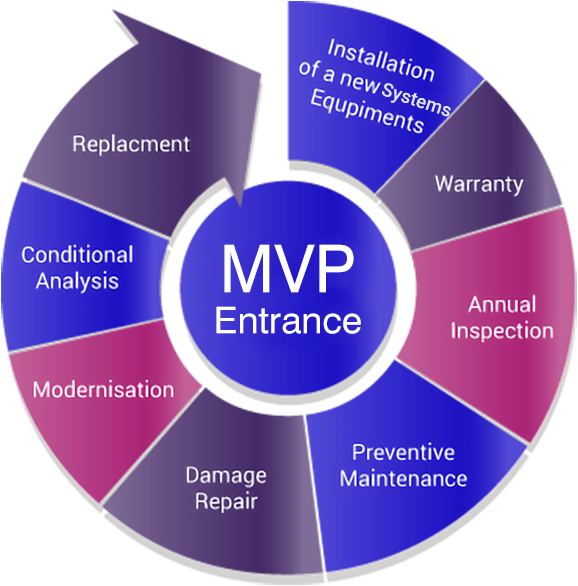
Before entering into any AMC contract, we prioritize the following essential tasks to ensure the smooth operation of the contract and achieve customer satisfaction.
- Site visit and survey
- Understand the customer scope
- Equipment visual inspection
- Equipment life end cycle analysis
- Product spare support availability
- Single point of failures and redundancy check
- Summarise the report to customer with right solution for discussion.
Learn more
Frequently Asked Questions
Q: What is a barrier?
A: A barrier, also known as a boom gate, is a physical arm or bar that controls vehicle access to a specific area, such as parking lots or toll booths.
Q: How does a barrier operate?
A: Barriers use a motor or hydraulic system to raise and lower the arm, allowing or restricting vehicle passage based on access control signals.
Q: What types of access control can be integrated with barriers?
A: Barriers can integrate with various access control methods, including RFID cards, vehicle tags, proximity readers, or ticketing systems.
Q: Are barriers weather-resistant?
A: Yes, barriers are designed to be weather-resistant and durable, suitable for outdoor installations in various environmental conditions.
Q: Can barriers be manually operated in case of power outages?
A: Many barriers have a manual release mechanism that allows them to be raised or lowered manually during power outages or emergencies.
Q: What is a window actuator?
A: A window actuator is an automatic device used to open and close windows, offering convenience and improved ventilation control.
Q: How does a window actuator work?
A: Window actuators use motors or linear drive systems to push or pull the window open or closed, typically controlled by switches or remote devices.
Q: Are window actuators suitable for all window types?
A: Window actuators can be adapted to various window types, such as casement, awning, or top-hung windows, depending on the model and installation.
Q: Are window actuators safe for homes with children or pets?
A: Yes, many window actuators come with safety features like obstruction detection to prevent accidental closing on objects or fingers.
Q: Can window actuators be integrated into a smart home system?
A: Absolutely. Window actuators can integrate with smart home systems, allowing users to control windows remotely or automate them based on sensors or schedules.
Q: What is a bollard?
A: A bollard is a short, sturdy post or pole installed to control or restrict vehicle access in pedestrian areas, protect buildings, or enhance security.
Q: Where are bollards commonly used?
A: Bollards are commonly used in places like pedestrian walkways, storefronts, government buildings, and parking areas to enhance safety and security.
Q: Are bollards customizable in terms of design?
A: Yes, bollards come in various designs, materials, and sizes, allowing for customization to match aesthetic preferences and functional requirements.
Q: Can bollards be automated or retractable?
A: Yes, automatic or retractable bollards are available, which can be raised or lowered electronically to allow temporary access for authorized vehicles.
Q: Are bollards crash-resistant?
A: Some bollards are designed to be crash-resistant and can act as anti-ram barriers, providing protection against vehicle-borne threats.
Q: What are automatic doors?
A: Automatic doors are doors equipped with sensors or motion detectors that open and close automatically when individuals approach or leave.
Q: Where are automatic doors commonly used?
A: Automatic doors are widely used in commercial buildings, hospitals, shopping malls, airports, and other high-traffic areas for ease of entry.
Q: What types of automatic doors are available?
A: There are various types of automatic doors, including sliding doors, swing doors, revolving doors, and folding doors, catering to different applications.
Q: Can automatic doors be operated manually in case of power failure?
A: Yes, most automatic doors have a manual mode to be operated manually in the event of a power outage or emergency.
Q: Are automatic doors safe to use?
A: Yes, automatic doors are designed with safety features like motion sensors and safety sensors to prevent collisions and ensure safe usage for pedestrians.
Q: What is a turnstile gate?
A: Turnstile gates are access control devices with rotating barriers used to allow or restrict entry into secure areas. They are commonly used in public transportation systems, stadiums, and office buildings.
Q: How do turnstile gates work?
A: Turnstile gates operate using a mechanical or electronic mechanism that allows only one person to pass through at a time after a valid entry credential, such as a ticket or access card, is presented.
Q: Are turnstile gates customizable?
A: Yes, turnstile gates can be customized to suit various applications, including different barrier heights, materials, and access control features like fingerprint or facial recognition.
Q: Can turnstile gates integrate with access control systems?
A: Absolutely. Turnstile gates can easily integrate with various access control systems, making it seamless to manage entry permissions and track user data.
Q: Are turnstile gates wheelchair accessible?
A: Yes, many modern turnstile gates come with accessible gates or lanes designed to accommodate wheelchair users and individuals with disabilities.
Q: What is a sliding gate?
A: A sliding gate is a type of automatic gate that slides horizontally to open and close. It is commonly used for driveways, commercial entrances, and industrial facilities.
Q: How does a sliding gate operate?
A: Sliding gates typically run on a track or rail system and are automated with motors, which slide the gate open or closed either manually or through remote control.
Q: Can sliding gates be installed on uneven surfaces?
A: Yes, sliding gates can be installed on uneven surfaces, but proper leveling and customization may be required to ensure smooth operation.
Q: What safety features do sliding gates have?
A: Sliding gates often come with safety sensors, like photo eyes or safety edges, to detect obstacles and prevent closing if an obstruction is detected.
Q: Can sliding gates be integrated with intercom systems?
A: Yes, sliding gates can integrate with intercom or access control systems, allowing users to grant entry remotely to visitors.
Q: What is a door frame metal detector?
A: A door frame metal detector is a security device installed at entry points to detect metal objects carried by individuals, such as weapons or contraband.
Q: How does a door frame metal detector work?
A: Door frame metal detectors emit low-level electromagnetic fields. When metal objects pass through the field, it disrupts the field, triggering an alarm.
Q: Are door frame metal detectors safe for users?
A: Yes, door frame metal detectors emit harmless electromagnetic fields and are considered safe for individuals with medical implants or pacemakers.
Q: Can door frame metal detectors be used outdoors?
A: Some door frame metal detectors are designed for outdoor use, but it’s essential to choose weather-resistant models and provide proper shelter.
Q: Do door frame metal detectors have sensitivity settings?
A: Yes, most door frame metal detectors have adjustable sensitivity levels to reduce false alarms and optimize detection accuracy.
Q: What is a telescopic gate?
A: A telescopic gate, also known as a sliding folding gate, is an automatic gate that opens and closes by sliding and folding its panels, maximizing the use of available space.
Q: Where are telescopic gates commonly used?
A: Telescopic gates are ideal for areas with limited lateral space, such as narrow driveways or entrances in urban environments.
Q: How does a telescopic gate differ from a regular sliding gate?
A: Telescopic gates use multiple interconnected panels that fold upon opening, reducing the required width when compared to a standard sliding gate.
Q: Can telescopic gates be automated?
A: Yes, telescopic gates can be automated with motors and controllers, allowing for remote operation and integration with access control systems.
Q: Are telescopic gates secure?
A: Telescopic gates provide excellent security when equipped with robust locking mechanisms and integrated with access control features.